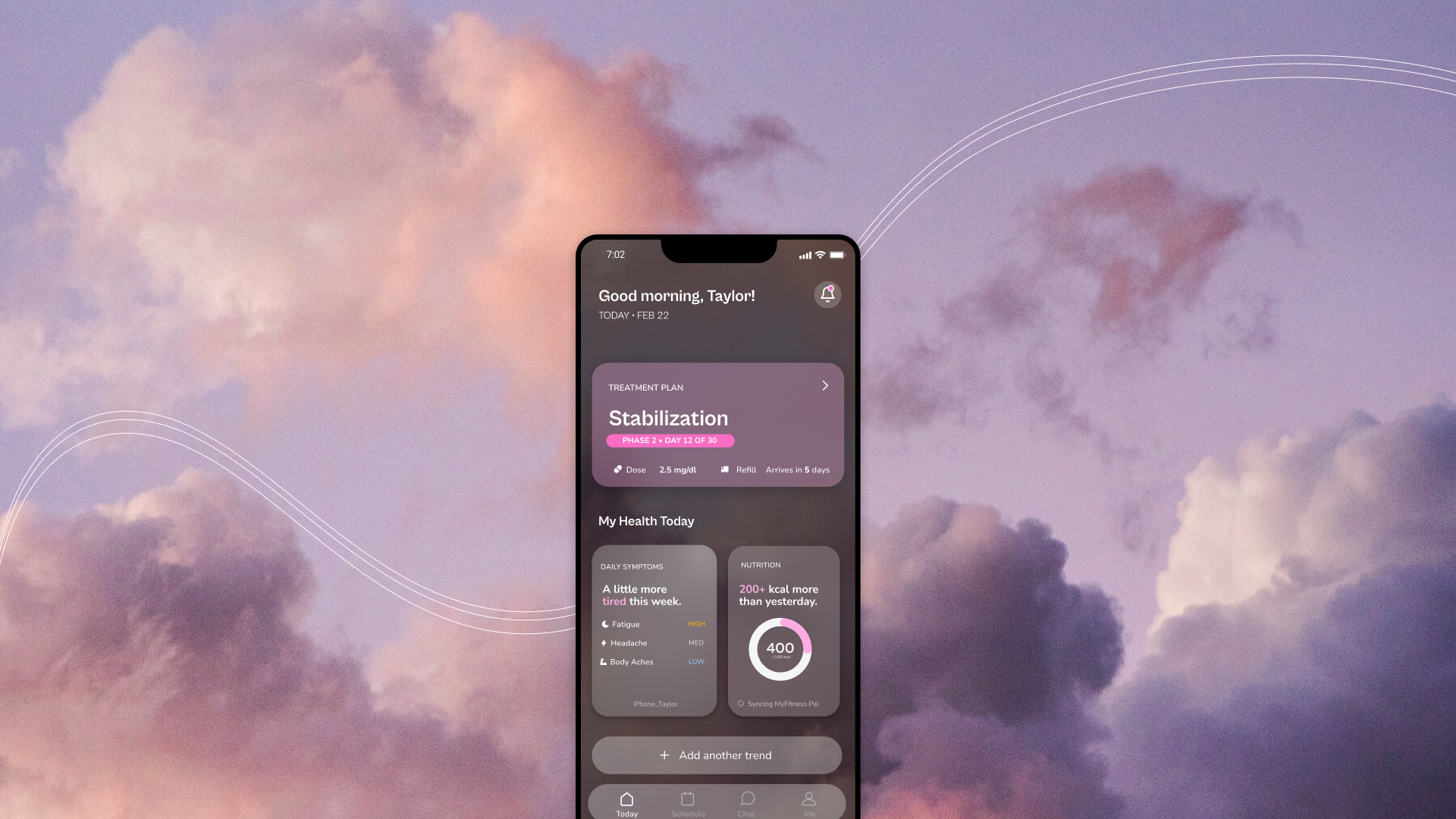
End to End Virtual Care Experience
Designing the patient experience treatment cycle
A confidential healthcare partner engaged my team at Artefact to create a cohesive
multi-step treatment journey for patients with obesity, from early awareness to long term medication
adherence.
Due to NDA, visuals are recreated to demonstrate process.
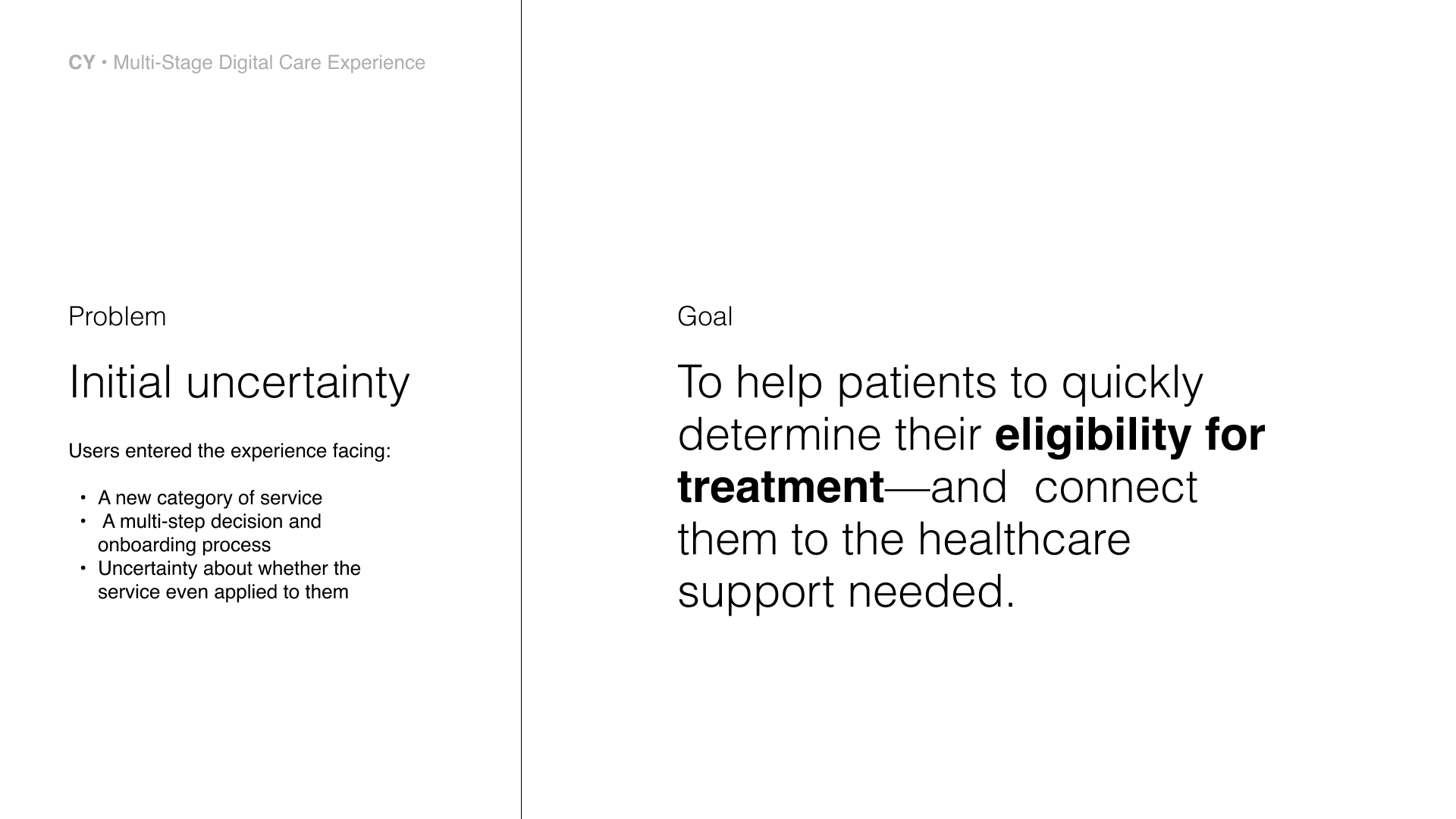
THE CHALLENGE
To help patients to quickly determine their eligibility for treatment —and connect them to the healthcare support needed.
ROLE
Designer @ Artefact Group
DELIVERABLES
Service map, wireframes, high-fidelity wireframes, prototype
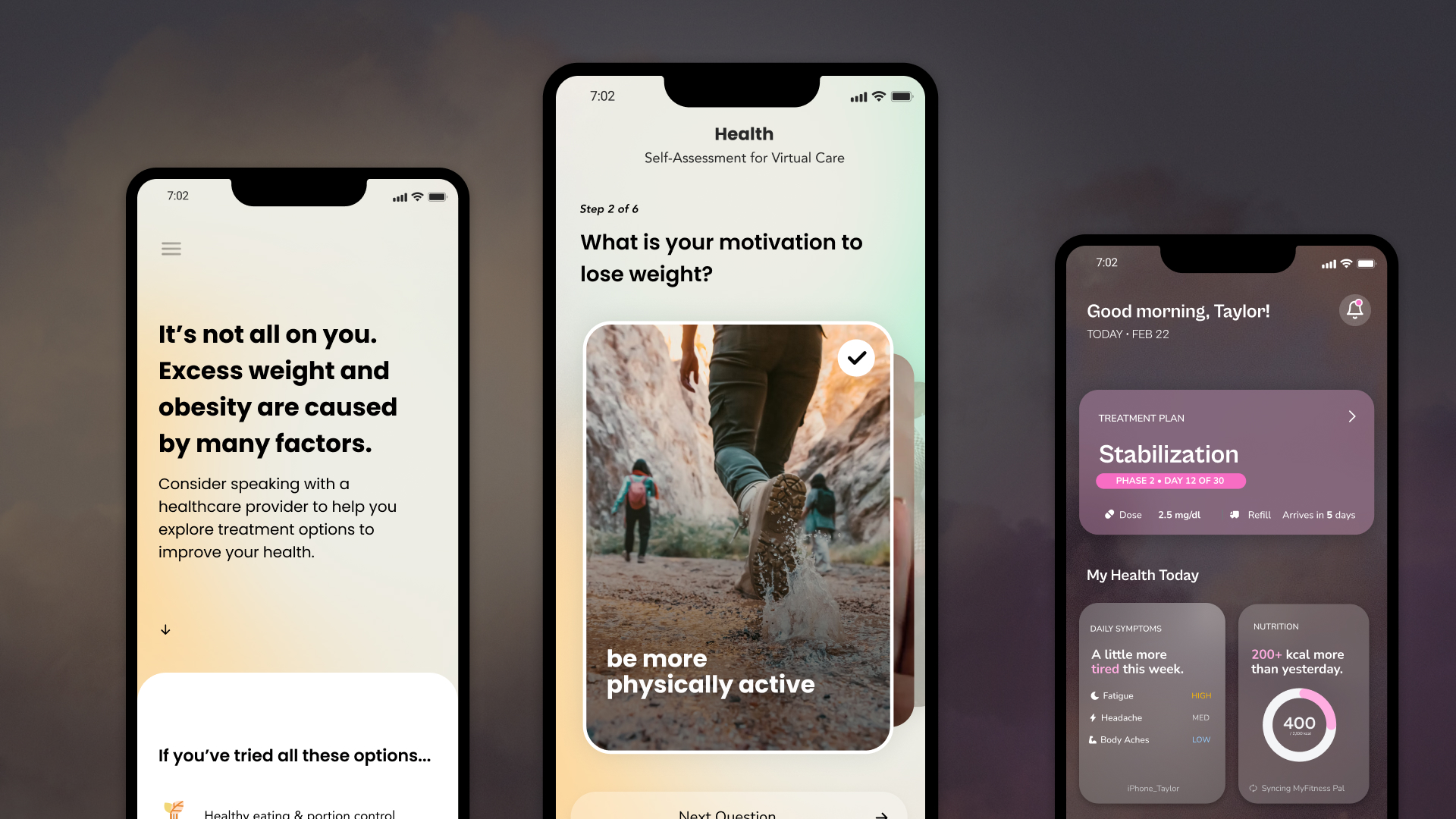
Barriers to Treatment
• Reduce confusion during key transition points
• Strengthen adherence throughout the treatment cycle
• Unify the digital touchpoints that support their broader service ecosystem
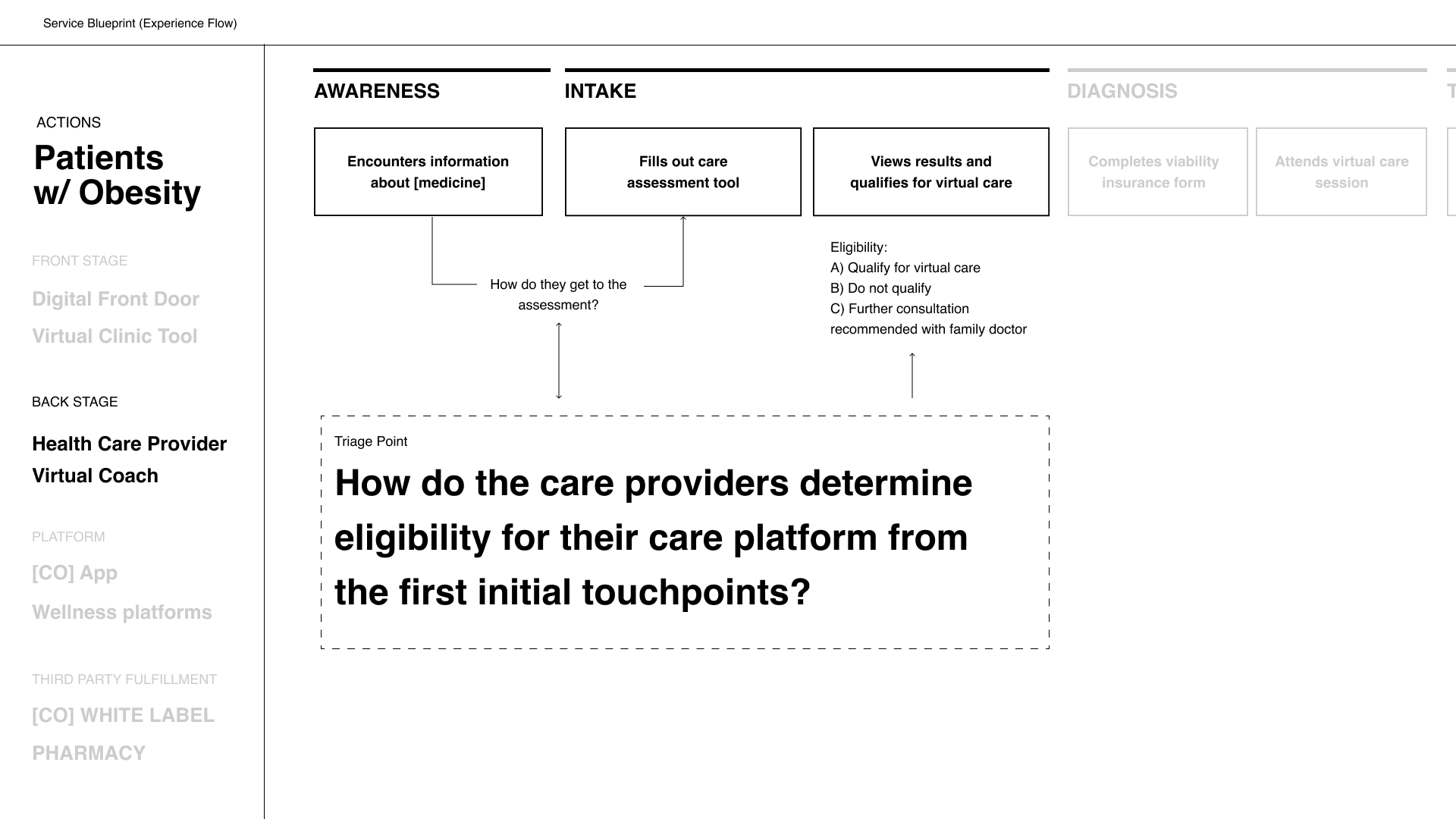
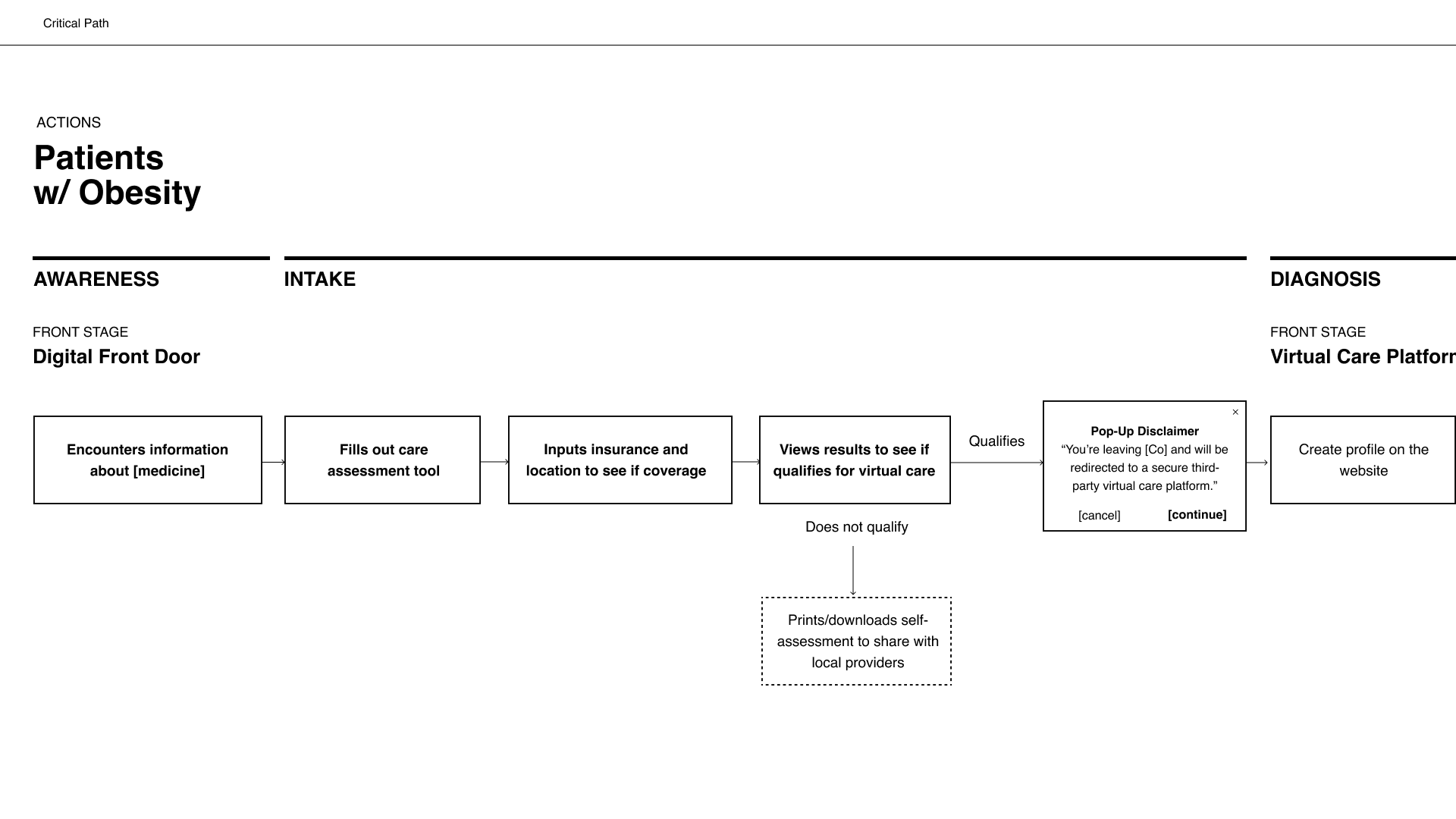
The Moment of Breakdown: Triage
Utilizing a service blueprint I was able to analyze the interactions across the virtual care experience
to reveal a key breakdown during intake: the triage moment, a crucial point that requires information
from the patient to proceed further for diagnosis.
Friction point: Gathering patient information effectivel
Streamlining to the minimum viable steps
• Defining where essential patient data needed to be captured
• Front-loading eligibility decisions to
reduce unnecessary drop-off
• Clarifying the boundary between the entry experience and the virtual clinic
handoff
Exploring Interaction
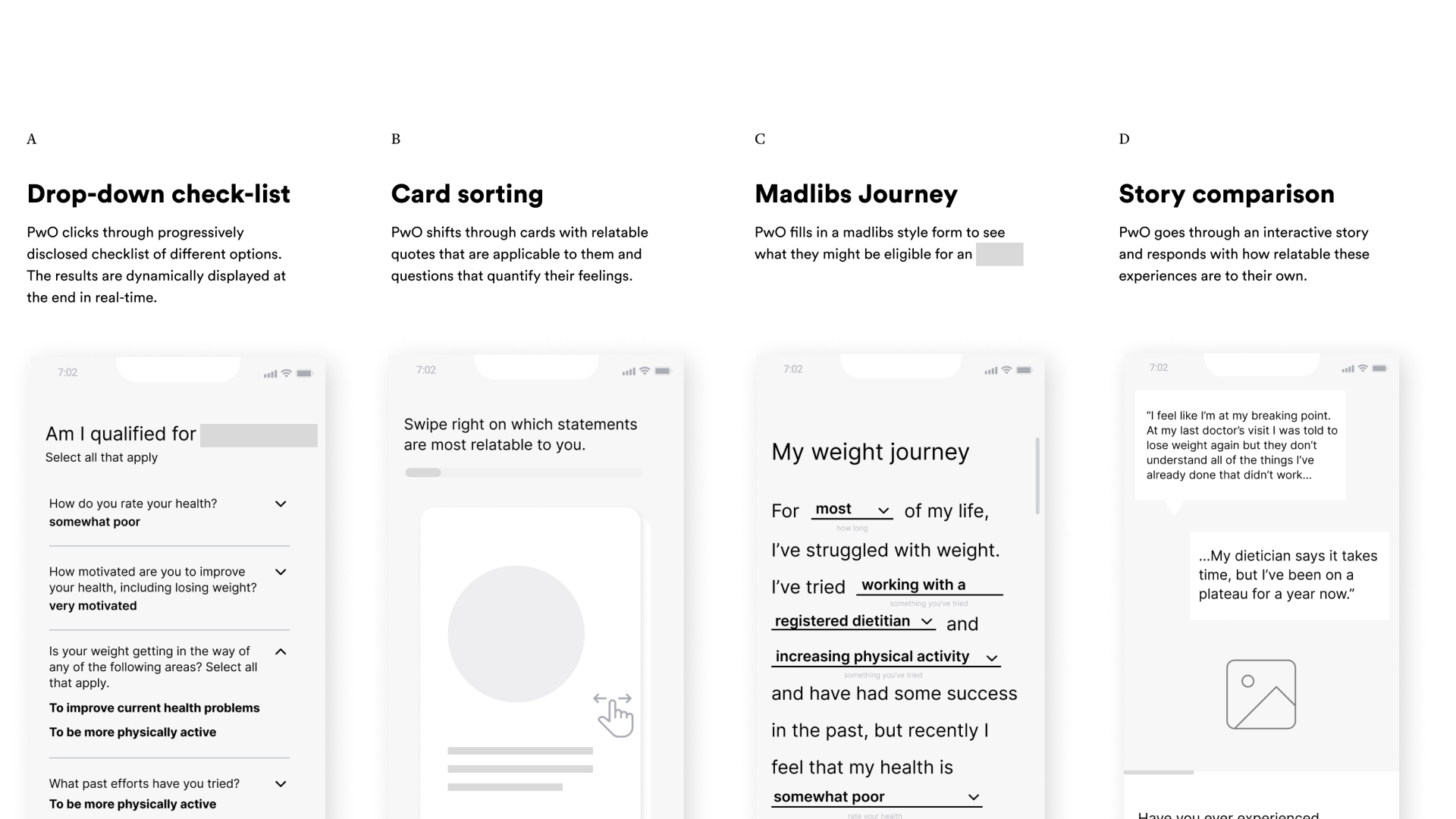
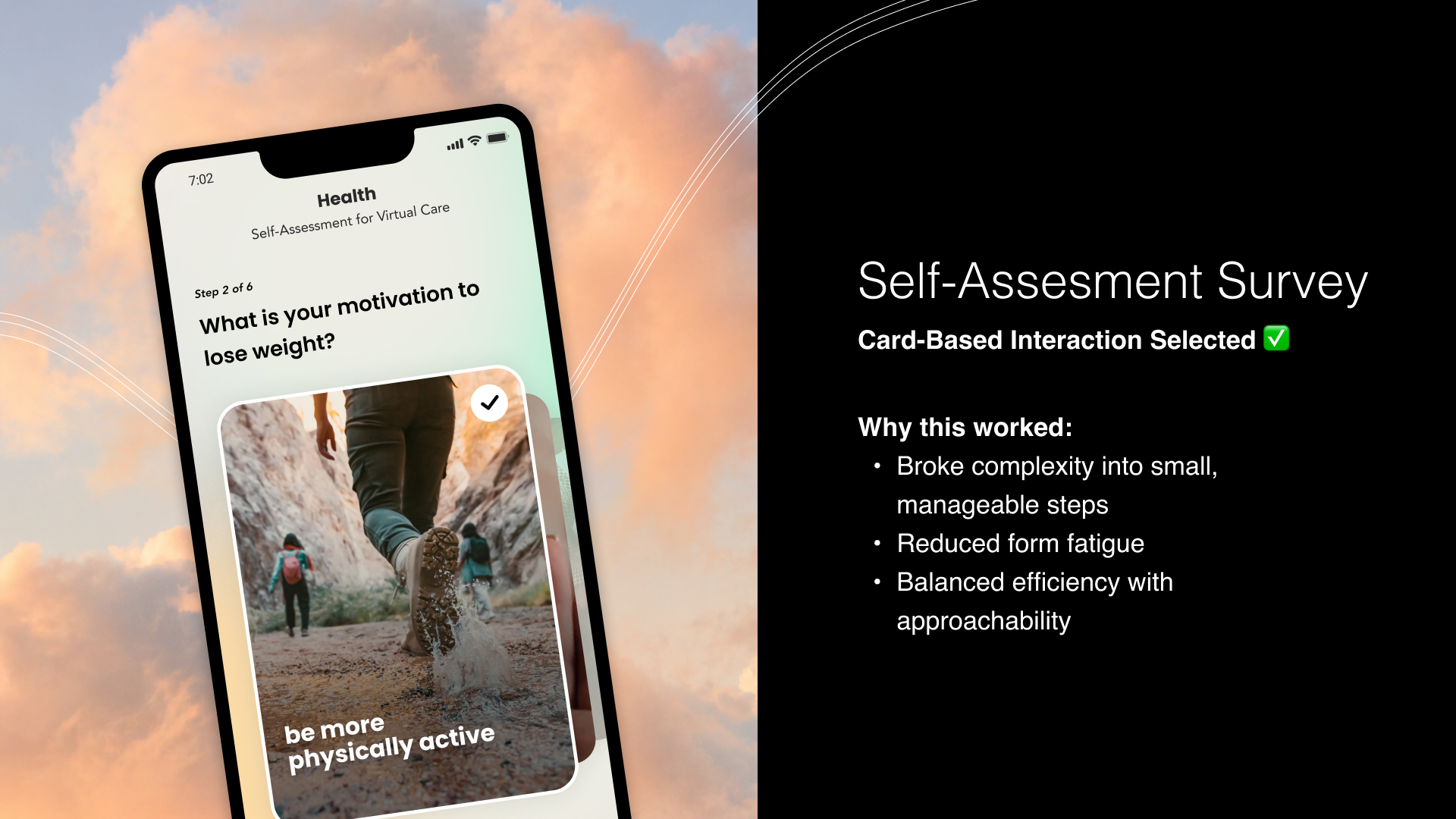
The intake survey was a critical triage moment that determined whether patients continued into care or dropped off. Selecting the right interaction model was essential to balancing patient confidence with clinical eligibility requirements, ensuring accurate decisions without introducing unnecessary friction.
Key Takeaways
• Stakeholder Collaboration is Critical: Engaging clinicians and stakeholders early and continuously
ensures alignment and uncovers hidden needs.
• Holistic Product Perspective: Seeing every detail, from UI interactions to backend workflows,
strengthens usability and reduces errors.
• Design with Empathy and Strategy: Connecting design decisions to both user needs and organizational
goals creates impactful, scalable healthcare solutions.
• Iterative Learning: Continuous feedback loops accelerate refinement and ensure the final product meets
real-world challenges.
• Conclusion: Deep collaboration + attention to detail = successful, patient-centered healthcare design.